


Water in Nature
“Water is the driving force of all nature.”
— Leonardo da Vinci
Water is so familiar that it can be easy to overlook how extraordinary it is.
It falls from clouds, gathers in puddles, disappears into soil, runs in streams and rivers, fills lakes and seas, freezes into ice, rises invisibly into the atmosphere and finds its way, again and again, through the living world. It is in every plant and animal, in every cell, in the soil beneath our feet and in the air around us. Water is not simply part of Nature. It is one of the things that enables Nature to happen.
And the more closely we follow it, the further the story takes us.
One Water. One continuous story.

Begin with water
At its simplest, water is a molecule: two hydrogen atoms joined to one oxygen atom. Yet that apparently modest arrangement gives water a remarkable range of physical and chemical behaviours, and those behaviours help explain its importance to life, landscapes and the planet itself.
The story reaches back much further than Earth. Hydrogen is among the oldest elements in the Universe, formed in its earliest stages, while oxygen was produced later inside stars and dispersed through space. On Earth, these elements became part of the chemistry from which our planet and its life emerged.
At some point in Earth’s deep history, chemistry crossed the threshold into biology. We do not yet know exactly how the first life began, but water provided the medium in which the chemistry of living systems could take place. The earliest life was simple compared with the astonishing diversity that followed, and reproduction initially required nothing like the elaborate sexual systems of later organisms.
From there, the story grew.
Plants transformed the relationship between life and its surroundings, capturing energy and building organic matter. Animals introduced movement, feeding, sensing and increasingly complex relationships. Life altered the environment even as the environment shaped life.
And throughout it all, there was water.

Water makes a world
Soil is not merely material beneath our feet. It is a meeting place for rock, minerals, air, organic matter, microorganisms, roots and water. Decay returns material to the system. Pores and spaces hold water. Roots reach into it. Organisms live within it.
Then there are rivers.
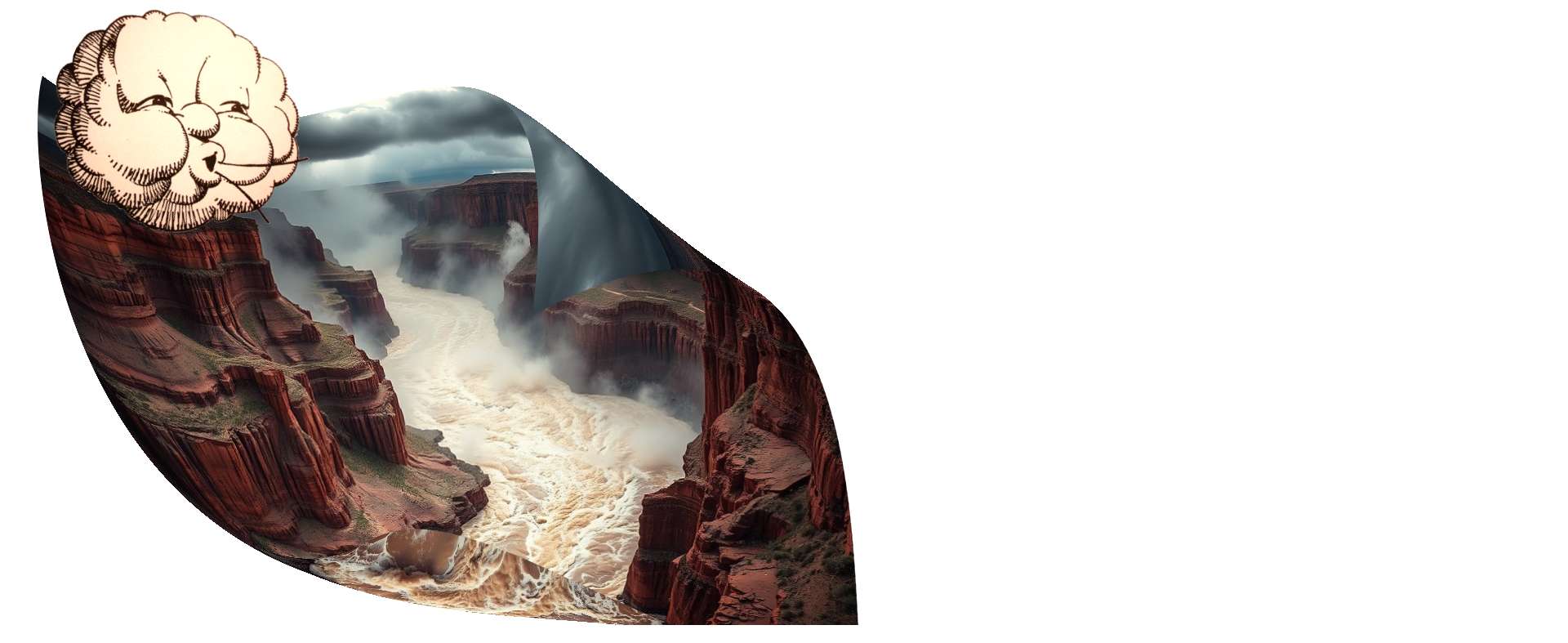
A river is Nature’s drainage and redistribution system: water moving through a landscape, carrying dissolved minerals, sediments and organic material with it. It feeds wetlands and floodplains, reshapes banks, connects habitats and carries the story of one part of a catchment into another.
Rivers are veins in the landscape.
That isn’t simply a metaphor. Rivers circulate the materials on which landscapes and ecosystems depend. They connect upland and lowland, soil and sea, rainfall and groundwater, mountain and estuary.
Water also works more slowly.
It weathers rock, transports sediment, carves valleys and gorges, feeds springs and aquifers, builds deltas and floodplains, and freezes into glaciers that can reshape entire mountain landscapes. Waves wear away coasts. Tides move water and sediment. Groundwater travels through hidden pathways beneath our feet.
Landscape is, in part, the record of water at work.
And once water, minerals, energy, climate and living organisms begin interacting, ecosystems become increasingly complex. Life occupies opportunities wherever they occur. One organism creates conditions that another can use; another becomes food, shelter or competition for something else.
The result is a living network.
And then there is us
Human beings arrive very late in this story.
By the time our species could consciously observe the world around it, Earth already contained an extraordinarily complex biomass, a vast mineral inheritance and an intricate network of water systems. Human intelligence gave us an unusual ability to recognise patterns, remember them, share them and deliberately alter our surroundings.
We settled where water was reliable.
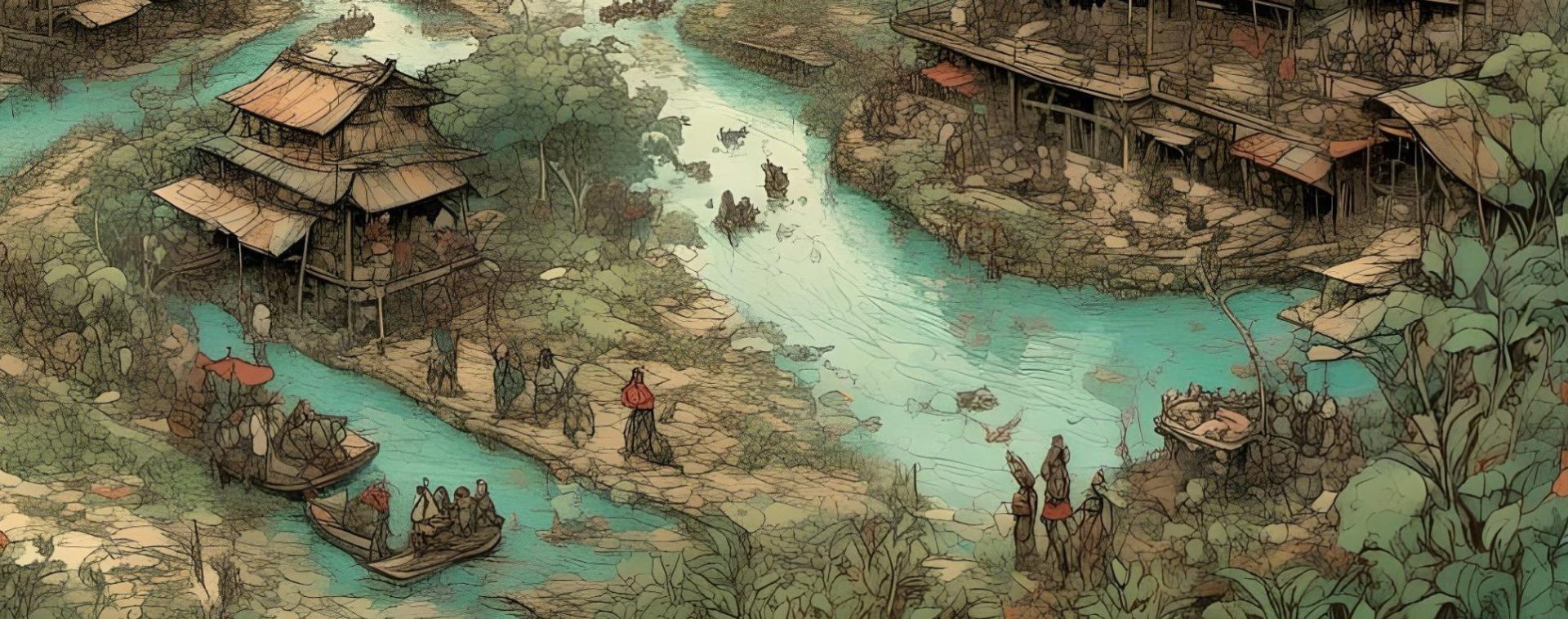
We learned to follow rivers, dig wells, find springs and collect rain. We learned that fertile land was often connected to water and that floods could be both destructive and nourishing.
Agriculture extended the possibilities of human settlement. Instead of relying entirely on what could be gathered, hunted or caught, people could cultivate food and support larger, more settled populations. Water became something to observe, predict, divert, store and share.
Civilisation grew around it.
Industry took the process further. Water became a solvent, a coolant, a means of transport, a source of power, a raw material in processes of manufacture and, too often, a convenient route for disposing of waste.
The same water that had supported life for billions of years could now be altered by human activity on a scale Nature had never encountered before.
Water becomes story



As communities became settled and separated by geography, different relationships with water developed.
People gave rivers names. They told stories about springs. They worshipped rainmakers and river gods. They built boats, bridges, wells, canals and fountains. They developed fishing traditions, water sports, ceremonies, songs, paintings and literature.
Water entered culture because water was already part of life.
As populations grew and individuals became increasingly specialised, economies developed to organise the exchange of food, materials, labour and knowledge. Yet beneath all those transactions remained a physical reality that is easy to overlook: almost everything we grow, make, move or consume has a water story.
And eventually water becomes political.
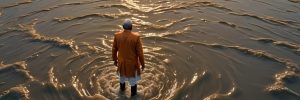



Rivers cross borders. Aquifers lie beneath territories. Drought affects food production. Floods affect communities. Access to water can determine where people live and how societies develop.
Water does not recognise the boundaries that humans draw upon maps.
That is why water reaches naturally from Nature into economics, politics, law and diplomacy — subjects that World of Water explores elsewhere. Here, the important point is the continuity: the water molecule has not stopped being water simply because human society has become more complicated.
Follow the water
This is why “Water in Nature” can never be just a display of clouds, rain, rivers, oceans and wildlife, fascinating though all those things are.
It is an invitation to follow the water.
Follow it into a cell.
Follow it into a root.
Follow it through soil.
Follow it down a river.
Follow it into a wetland, an ocean, a glacier or an aquifer.
Follow it through the food web.
Follow it into a settlement, a farm, a factory and a city.
Follow it into culture, commerce and politics.
And then follow it beyond Earth.

Because humanity’s search for water in space is not an arbitrary scientific treasure hunt. We know that life as we understand it depends on water, and we know that human beings themselves are water-dependent, carbon-based organisms. As we explore the Solar System and look further into the Universe, the presence, history and movement of water become some of the clues we use when asking whether environments might once have supported — or could perhaps still support — life.
Water has already taken us from the beginning of our planetary story to the present.
Perhaps it will help take us further.
Water in Nature — and beyond
This is the thinking behind World of Water’s planned Water in Nature exhibition and, more broadly, the developing International Water Awareness Centre (IWAC).
The purpose is not simply to tell people that water is important. Most people already know that.
The challenge is to help us see it.
To see the water moving through a landscape. To see the invisible water held in soil and rock. To see the life within a drop. To see the history written into sediment and fossils. To see the connections between a river, a field, a city and a sea.
Objects can help us do that: fossils and shells, rocks and sediments, plants and roots, specimens of aquatic life, maps of river systems, geological evidence, historical artefacts, images from beneath the sea and beyond Earth, and the countless ordinary objects through which water enters human life.
Interactive exhibits can allow visitors to investigate rather than simply observe — testing water, following a watershed, watching erosion, exploring an aquifer, discovering aquatic food webs or seeing how a landscape changes when water moves through it.
Stories can carry the same ideas across generations.
And that matters because awareness is not an end in itself. This is intended to be a call-to-action exhibition: an invitation to treasure water more deeply and to understand what happens when we damage its ability to perform its natural work.
We want visitors to leave not merely knowing more about water, but seeing the world differently.
One Water
World of Water’s approach is deliberately broad.
Water matters at the molecular level. It matters to the living cell, the plant, the animal, the soil, the river and the landscape. It matters to ecosystems, settlements, agriculture and industry. It enters our cultures, economies and politics. It reaches into our understanding of life beyond Earth.
These are not disconnected subjects.
They are chapters in one story.
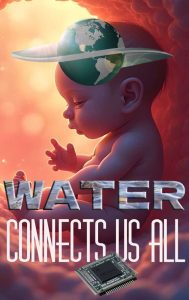
That is why World of Water aims to inspire people of all ages and backgrounds to understand and appreciate water’s significance in every facet of our lives — from the smallest workings of matter to the largest questions facing humanity.
And perhaps that is the simplest way to begin understanding the nature of water:
Follow the water, and you eventually find the whole story of life — and the story of us.
One Water. One continuous story.
And the story, like water itself, keeps flowing.

Can you help us tell the story?
An exhibition about water needs objects that have stories of their own. World of Water is interested in hearing from anyone who may have something that could help us explore the extraordinary relationship between water, Nature and life.
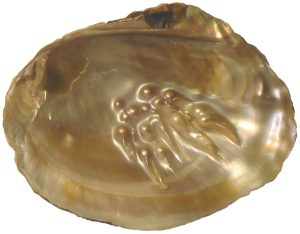
Perhaps it is a fossil formed in an ancient sea, a geological specimen shaped by water, an old map, a water-measuring instrument, a vessel associated with water, or an object whose connection with water isn’t immediately obvious.
It may be something we haven’t thought of yet.
If you have an object, specimen, collection or story that you think might help us tell the story, we’d love to hear from you.
Be part of the story
Perhaps you have an object, a memory, an idea or a vision that could help us understand water differently. Share with us your vision for a sustainable and water-conscious future.
If you have an item or specimen that you think could support World of Water’s exhibition and schools outreach programmes, please take a look at our acquisitions policy and use of collections. We are always interested in discovering objects that can help reveal another part of water’s story.
And if you would like to contribute in other ways, you can find out more about volunteering with World of Water.