


Water in Space and Geoforming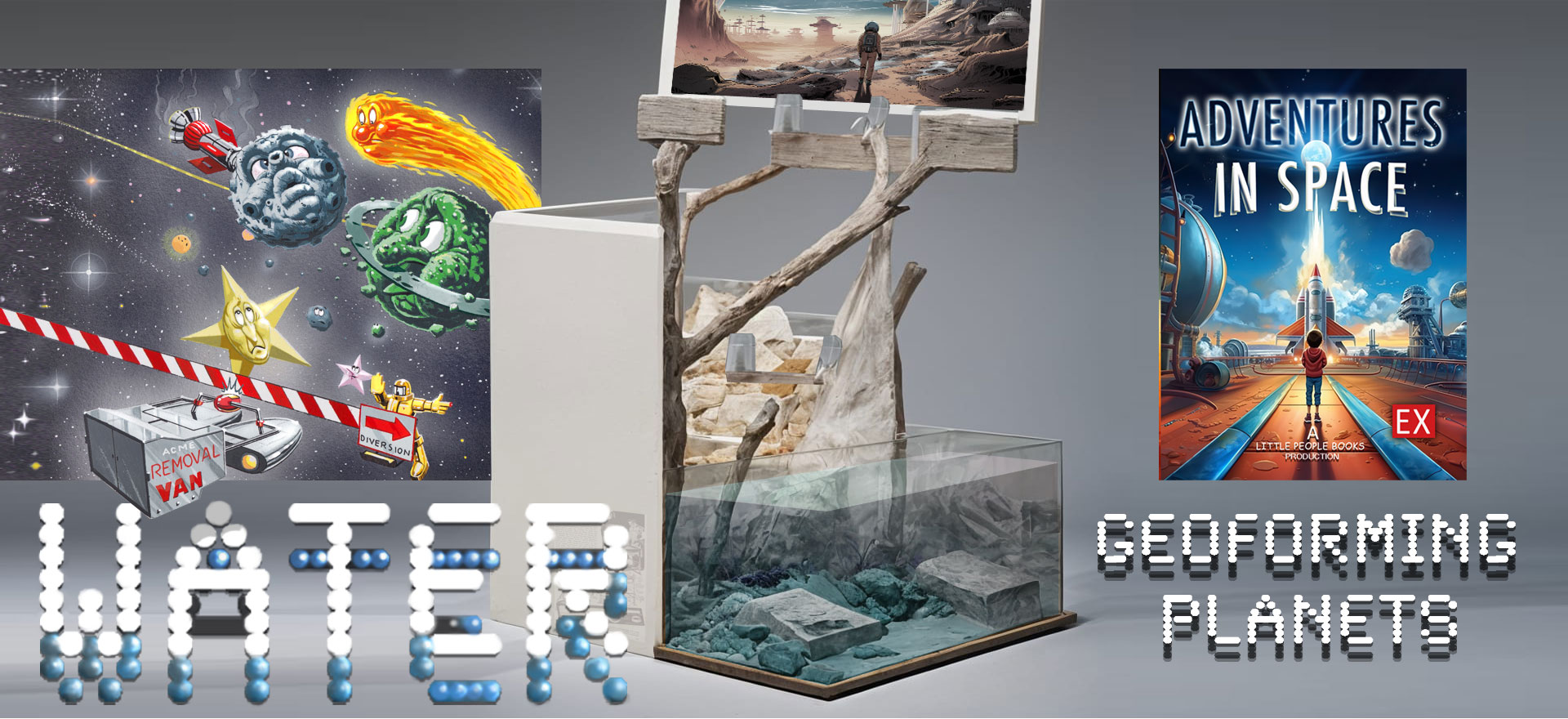
Space Water in Geoforming
As humanity aims to become a multi-planet species, understanding the role of water in space is paramount. The International Water Awareness Centre (IWAC) aims to be at the forefront of this exploration, bridging Earth-based water science with the unique challenges of Space Water environments.
Water’s potential in space extends beyond mere sustenance. It can be split into hydrogen and oxygen to fuel rockets, serve as a coolant for machinery, and act as a lubricant in the vacuum of space. Beyond these uses, Space Water can rehydrate freeze-dried foods, purify equipment, clean spacecraft surfaces, dilute solutions, and assist in waste management.
However, Space Water presents distinct challenges. Unlike Earth’s diverse waters, Space Water may lack organic matter and could behave differently due to space’s unique pressures and temperatures. It might impact electronics, foster mold, and react differently in terms of boiling points and cloud formation.
The IWAC’s mission is to understand these complexities and adapt Earth-based water technologies for space. By learning from our past practices of water management on Earth – moving from pollution and waste to sustainable usage – we aim to ensure that our approach to Space Water is both innovative and responsible. This preparation will be crucial for harnessing limited space resources effectively and ensuring the longevity of human life beyond our planet.
Exploring Water in Space: From Icy Moons to Geoforming New Worlds
Water is essential for life as we know it, and its presence—or absence—can determine the habitability of celestial bodies. In our quest to explore and possibly settle new worlds, understanding and utilizing water in space is crucial. This blog delves into the sources of water beyond Earth, including comets, icy moons, and asteroids, and explores the innovative concept of geoforming to create habitable environments where none exist.
Sources of Water in Space
1. Comets: The Cosmic Ice Balls
Comets, often described as “dirty snowballs,” are fascinating objects in our solar system. They are composed of a mix of water ice, frozen gases, and rocky material. As comets approach the Sun, the heat causes the ice to vaporize, forming a glowing coma and a spectacular tail. This vaporized ice represents a significant source of water that could be harvested. By splitting this water into hydrogen and oxygen, we can generate fuel for spacecraft, making comets a valuable resource for future space missions.
2. Icy Moons: Subsurface Oceans
Several moons in our solar system are covered in thick layers of ice, beneath which lie vast oceans of liquid water.
- Europa (Moon of Jupiter): Europa’s icy crust conceals a subsurface ocean, making it a prime candidate in the search for extraterrestrial life.
- Enceladus (Moon of Saturn): Enceladus has geysers that eject water vapor and ice particles into space, confirming the presence of a subsurface ocean and organic compounds.
- Ganymede and Callisto (Moons of Jupiter): These moons are also believed to have subsurface oceans beneath their icy surfaces.
3. Asteroids: Water-Rich Space Rocks
C-type asteroids, found in the asteroid belt, contain water in the form of hydrated minerals. These asteroids are abundant and could provide essential resources for space missions. Recent missions like NASA’s OSIRIS-REx and JAXA’s Hayabusa2 have shown that mining asteroids for water and other resources is not only feasible but could be pivotal for future exploration.
Technologies for Mining Ice in Space
1. Robotic Miners
Robotic miners could be sent to these icy bodies to extract water. These robots would land on comets, moons, or asteroids, harvest ice, and process it into usable water.
2. In-Situ Resource Utilization (ISRU)
ISRU technologies are advancing to use local resources on celestial bodies. For instance, ice mining technologies could produce water, oxygen, and hydrogen on the Moon or Mars, reducing the need to transport these resources from Earth.
3. Cryogenic Storage
To transport harvested ice or water through space, cryogenic storage technologies are essential. Cryogenic tanks can keep water in a frozen state, ensuring it remains usable until it reaches its destination.
Geoforming: Shaping New Worlds
As we explore the possibilities of creating habitable environments on other planets, geoforming – transforming a planet’s environment to make it more Earth-like – becomes a key concept.
1. The Basics of Geoforming
Geoforming involves altering a planet’s surface and atmosphere to support liquid water and life. This can include changing atmospheric composition, surface characteristics, and introducing water to create conditions similar to Earth.
2. Water Creation on New Worlds
On planets lacking natural water sources, introducing life forms capable of producing water through metabolic processes could be a game-changer. These organisms could metabolize hydrogen and oxygen to create water, which over time could accumulate to form bodies of water.
3. Technologies and Methods:
- Terraforming Techniques: Methods such as releasing greenhouse gases to warm a planet and stabilize liquid water could make a planet more habitable.
- Ice Mining and Delivery: Water from comets and asteroids could be delivered to new planets to kickstart the formation of oceans, lakes, or rivers.
Conclusion
Large frozen ice bodies like comets, icy moons, and asteroids offer significant potential for mining water in space. These resources are crucial not only for supporting human exploration but also for the ambitious concept of geoforming new worlds. By advancing space mining and geoforming technologies, we pave the way for transforming barren celestial bodies into habitable environments, potentially expanding the reach of human civilization in the solar system.

Our Upcoming Exhibition: “Water in Geoforming”
Our upcoming exhibition, “Water in Geoforming,” explores the essential role of water in shaping habitable environments beyond Earth. This exhibition delves into the intersections between space science, technology, and environmental innovation, educating visitors on how water can be harnessed to transform celestial bodies into livable spaces.
By understanding the science behind water’s potential to support life and kickstart ecosystems on other planets, we can better appreciate the importance of space resources for the future of humanity.
However, if we fail to understand how to maintain our own planet in balance with Nature, we stand very little chance of ever understanding enough to successfully geoform, maintain, and develop any other. This exhibition underscores the importance of sustainability here on Earth as the foundation for any future endeavors beyond our home planet.
Join Us in Shaping New Worlds: Support our Exhibition
Your support is vital in helping us advance education around geoforming and water’s role in space exploration. We invite you to share your insights, donate relevant artifacts, or contribute financially to this important cause. Together, we can expand the conversation about using water to build sustainable environments in space, ensuring that humanity is prepared for its next frontier.
Let’s work together to explore new worlds, ensuring that water continues to sustain life, not just on Earth, but in the farthest reaches of our solar system. Join us in this exciting journey and help inspire future generations to think beyond our planet.
Further Reading:
NASA: Solar System Exploration
https://solarsystem.nasa.gov
A comprehensive resource for exploring planets, moons, and comets, including information on water in space.
ESA: Water on Mars
https://www.esa.int/Science_Exploration/Human_and_Robotic_Exploration/Mars500/Water_on_Mars
Details about the European Space Agency’s research into water on Mars and its implications for human settlement.
National Geographic: How Scientists Are Searching for Life on Moons of Jupiter and Saturn
https://www.nationalgeographic.com/science/article/search-for-life-jupiter-saturn-moons
Insights into the quest for extraterrestrial life on icy moons like Europa and Enceladus.
MIT Technology Review: The Future of Space Mining
https://www.technologyreview.com/2019/11/13/132839/the-future-of-space-mining
An article exploring the potential of space mining for water and other resources.
Discover more from World of Water
Subscribe to get the latest posts sent to your email.