


Water in Disintegration and Decay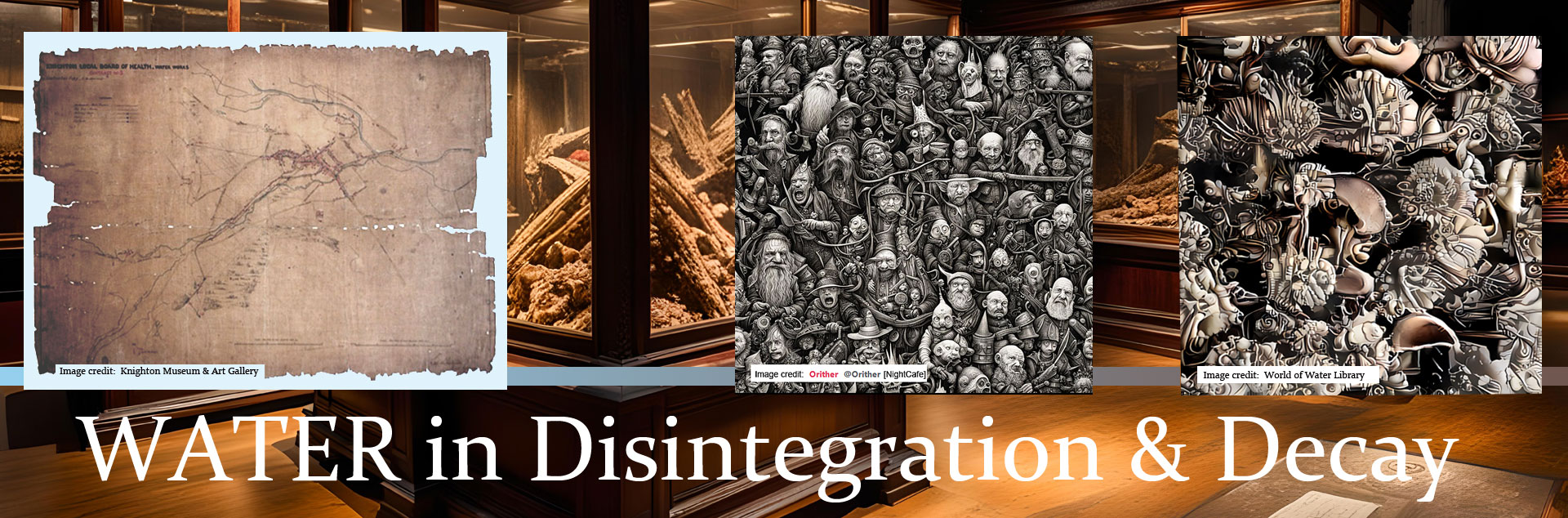
Rust, Rot, and Return to Nature: How Water Transforms Our World
Water, often associated with life and renewal, also plays a critical role in processes of decay, disintegration, and transformation. Our upcoming charity exhibition, “Water in Disintegration and Decay,” invites you to explore this fascinating aspect of water’s influence on our world. From the rusting of iron to the erosion of landscapes, water’s ability to decompose, deteriorate, and recycle materials is a profound reminder of nature’s relentless cycles.

The exhibition brings these processes to life by showcasing objects made from metals, glass, stone, pottery, vegetation, plastics and wood at various stages of decomposition – some shaped by centuries of erosion. Each exhibit highlights water’s role in shaping the materials and landscapes we often take for granted.
The “Sea-Worn” beach combed collection features driftwood, shells, plastics and sea glass, demonstrating how salty ocean waves transform materials over time. Exhibits include those found during our beach clean ups with volunteers.
The “Mud Larked” river collection is of coins, glass and pottery – dis-guarded items that surfaced downstream. Many of these finds came from a stream in Scotland that cut its way through a Victorian dump.
The “Un-Earthed” collection is of items dug up or exposed to wind and rain. Though most volunteers with metal detectors may hope to find a hoard of treasure, many do a useful ‘clean-up’ job of soil at the same time.
These exhibits not only educate about natural processes but also raise awareness of critical environmental issues.
Going on a beach clean?
We welcome interesting donations that promote a greater understanding of how water plays its role in both decay and regeneration.

Doors into the Next Layer of the Story
World of Water Museum
National Oceanic and Atmospheric Administration (NOAA) – Ocean Acidification and its Impact on Marine Life:
https://oceanservice.noaa.gov/facts/acidification.html
This link covers how water chemistry, particularly ocean acidification, contributes to environmental decay and impacts marine ecosystems.
Smithsonian Ocean – The Role of Water in Erosion and Coastal Change:
https://ocean.si.edu/planet-ocean/waves-storms-coastal-erosion
A deep dive into how water shapes and erodes coastlines, impacting both natural and human-made environments.
Royal Society of Chemistry – Corrosion in Water and the Environment:
https://edu.rsc.org/resources/corrosion/1803.article
Detailed scientific exploration of how water causes rust and corrosion in various materials.
The Conversation – Peat Bogs and Waterlogged Environments Preserving History:
https://theconversation.com/bogs-bodies-and-bogwood-how-waterlogged-sites-preserve-ancient-histories-154622
This article explains how waterlogged environments like peat bogs preserve ancient artifacts through unique decay processes.
Environmental Protection Agency (EPA) – Water Erosion and Sediment Control:
https://www.epa.gov/npdes/erosion-sediment-control
Outlines water erosion processes and their impact on landscapes and ecosystems, including methods of managing this decay.

Discover more from World of Water
Subscribe to get the latest posts sent to your email.