


“Like the rivers that have shaped our borders, history itself flows like a great watercourse. In his Der Strom der Zeiten, Friedrich Strass envisioned history as an ever-branching river, with civilizations rising and merging like tributaries. Just as rivers have carved the landscapes of our world, they have also shaped human destiny—sometimes uniting people, sometimes dividing them. As we look at the way water disputes unfold today, we see that the flow of history, much like a river, is never truly static.”
Rivers as Borders: A Natural Choice
Historically, rivers provided early civilizations with water, trade routes, and fertile land. At the same time, they acted as formidable barriers against invasion. The Tigris and Euphrates cradled Mesopotamian societies, the Nile sustained ancient Egypt, and the Indus River was the lifeblood of South Asia. The Romans leveraged rivers like the Rhine and Danube as defensive frontiers, demarcating the edges of their empire.
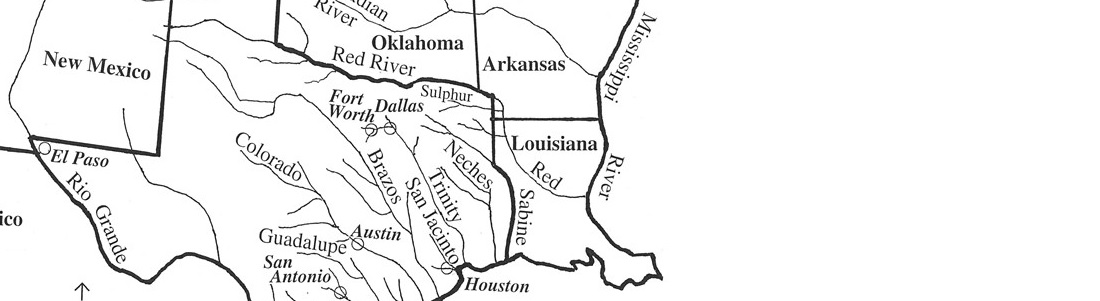
Even in the modern world, rivers define roughly 28% of global land boundaries, totaling around 71,000 kilometers. The Rio Grande separates the U.S. from Mexico, the Zambezi divides Zambia and Zimbabwe, and the Danube weaves a complex web of borders through ten European nations. These waterways, however, are not static—they shift, meander, and flood, often leading to disputes over where one country ends and another begins.
Crossing the Divide: Fords, Bridges, and Settlements
Rivers may divide, but they also connect. Since ancient times, humans have sought ways to cross them, leading to the development of fords, ferries, and eventually, bridges. Cities flourished where crossings were established—think of London along the Thames or Paris on the Seine. Bridges symbolized unity, linking trade routes and cultures.
However, as technology advanced, so did our relationship with rivers. Before 1870, most settlements clung to riverbanks for survival. But with the advent of railways and groundwater extraction, human expansion shifted, and rivers became less of a necessity and more of a boundary marker.
The Water Wars: Dams, Diversions, and Disputes
The true challenge of river borders isn’t just political—it’s environmental. Water is a finite resource, and as populations grow, so does competition over who gets to use it. The world has seen numerous disputes over dam construction and water diversion, often leading to diplomatic tensions, if not outright conflict.
- The Nile: Egypt, Ethiopia, and Sudan have long debated control over the river’s flow, particularly with Ethiopia’s construction of the Grand Renaissance Dam.
- The Brahmaputra: China’s dam projects on this Himalayan river have raised concerns in India about potential water shortages downstream.
- The Jordan River: Israel, Jordan, Syria, and Palestine have been at odds over access to this critical waterway for decades.
- The Colorado River: Overuse has left this once-mighty river struggling to reach the sea, as U.S. states and Mexico wrestle over shrinking resources.
Cooperation or Conflict?
Despite tensions, some nations have found ways to manage their shared rivers collaboratively. The Mekong River Commission brings together Southeast Asian countries to regulate the river’s use, though not without challenges. Similarly, treaties have attempted to mediate disputes, but as climate change alters river flows, new conflicts may emerge.
Rivers: Fluid Frontiers in a Changing World
Rivers have shaped the story of humanity—serving as lifelines, borders, battlegrounds, and bridges. They’ve guided migrations, spurred civilizations, and sparked disputes. As climate change reshapes these natural boundaries, we must ask: will rivers continue to divide us, or can they become sources of cooperation and shared survival?