


Water in Leisure and Play
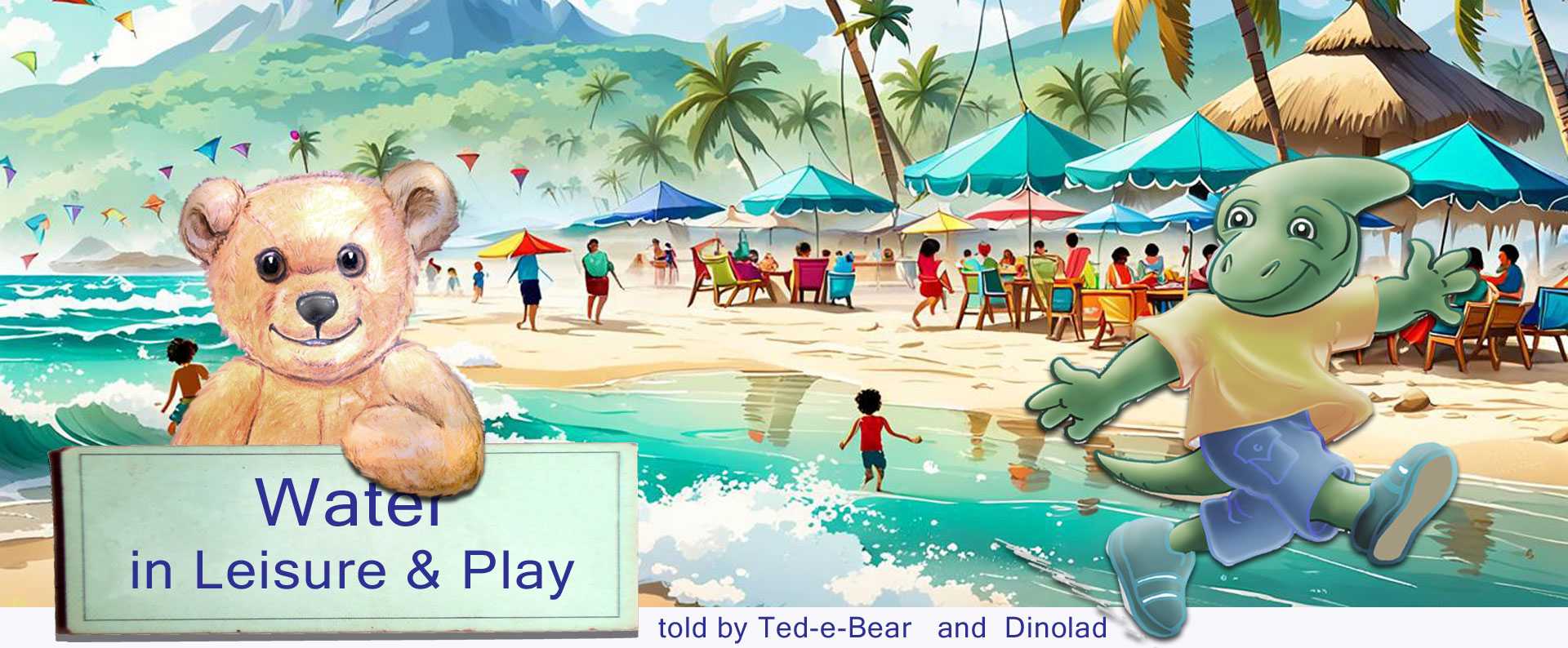
Water in Leisure and Play: A Primordial Connection
The Origins of Life in Water:
Life as we know it began in water. From the simplest single-celled organisms to complex multicellular life, water has been the cradle of evolution. This aquatic origin is evident in the cellular structure of all living things, whether they inhabit land or sea. The fundamental similarity in cell composition across species – with water making up a significant portion of cellular content – underscores our shared aquatic heritage.
From Sea to Land: An Evolutionary Journey:
The transition of life from water to land is one of the most significant events in evolutionary history. This journey is reflected in the skeletal structures of various species. For instance, the similarities between the bones in a human hand and the fin of a coelacanth (an ancient fish) demonstrate our aquatic ancestry. Even mammals like whales, which returned to the sea, retain vestiges of their terrestrial past in their skeletal structure (see links below)
Water and Human Development:
Our connection to water begins before birth. The amniotic fluid that surrounds a developing fetus is reminiscent of the primordial seas where life originated. This early aquatic environment may explain why some newborns demonstrate innate swimming abilities when placed in water, a phenomenon observed across various cultures.
Water in Play and Leisure: A Universal Appeal
Childhood Wonder:
For children, water is a world of discovery and joy. From splashing in puddles to building sandcastles, water play fosters creativity, teaches basic physics principles, and provides sensory experiences crucial for development. Activities like “What floats? What sinks?” engage young minds in scientific inquiry through play.
Cultural Variations in Water Play:
Across the globe, water features prominently in children’s games and leisure activities. In Japan, the water balloon game called Yo-Yo Tsuri” (ヨーヨーつり) ( https://www.youtube.com/watch?v=VVJHv6XskOI) is a popular summer pastime. In India, the festival of Holi involves playful water fights with colored water (see links below). These diverse traditions highlight the universal appeal of water in play.
Adult Recreation and Relaxation:
As we grow, our relationship with water evolves but remains significant. Swimming, surfing, and sailing offer moments of freedom and connection to nature. In Nordic countries, the practice of ice swimming combines leisure with cultural tradition and potential health benefits.
The Therapeutic Power of Water:
Water’s therapeutic properties have been recognized across cultures for millennia. From Roman baths to Japanese onsen, humans have long sought healing and relaxation in water. Modern hydrotherapy practices continue this tradition, utilizing water for physical and mental well-being.
Sustainable Water Use in Leisure and Play:
As we enjoy water-based activities, it’s crucial to recognize our responsibility towards water conservation. Sustainable practices in water parks, public pools, and even home water play can significantly reduce water waste. For instance, some water parks now use recycled water systems to minimize environmental impact.
Protecting Our Aquatic Heritage:
The health of our water sources is vital not just for leisure but for the survival of all life. By safeguarding our oceans, rivers, and lakes, we ensure that future generations can experience the same joys and connections that have defined humanity’s relationship with water since time immemorial.
Conclusion:
A Call for Water Stewardship
Our deep connection to water, rooted in our evolutionary past and expressed through play and leisure, underscores the importance of water conservation. As we enjoy water-based activities, let’s also commit to protecting this precious resource. By doing so, we honor our aquatic origins and ensure a sustainable future for all life on Earth.

In line with this commitment, we are excited to announce our charity’s upcoming exhibition, “Water in Leisure and Play.” This exhibition aims to explore the profound relationship between water and our lives, highlighting its role in play, relaxation, and cultural practices.
We invite you to join us in this journey of discovery and awareness.
Your support will help us educate others about the significance of water conservation and the joy it brings to our lives. Together, let’s celebrate water and inspire future generations to cherish and protect this vital resource.
———————
Further reading:
Whales and their land history:
https://evolution-outreach.biomedcentral.com/articles/10.1007/s12052-009-0135-2
This article provides a comprehensive overview of cetacean evolution, discussing the fossil record and anatomical changes as whales transitioned from land to sea.
https://www.sciencedirect.com/science/article/pii/S0960982217305377
This paper examines the ecological rise of whales as documented by the fossil record, offering insights into their evolutionary adaptations and diversification.
https://ncse.ngo/origin-whales-and-power-independent-evidence
This article presents multiple lines of evidence for whale evolution from various scientific disciplines, demonstrating the strength of independent corroboration in evolutionary studies.
Holi Pigments (India)
This article from Chemical & Engineering News (C&EN) discusses the issue of low-quality industrial pigments often used in Holi. https://cen.acs.org/articles/96/i9/Holi-colors-gives-vibrant-hues.html This article also provides information on the chemical composition of Holi colours and the use of hazardous industrial pigments.